Why Is My Espresso Bitter? Fixing Over-Extraction Step by Step
First: confirm it’s actually bitter (not sour)
- Bitter = harsh, dry, ashy — like over-steeped black tea, burnt toast, or cigarette ash. It dries out the back of your tongue and lingers unpleasantly.
- Sour = sharp, tangy, puckering — like lemon juice or vinegar.
Dark-roast drinkers: dark roasts have an inherent roasty bitterness even in a perfect shot. What’s fixable is the harsh, ashy, mouth-drying kind.
The baseline
- Dose: 18g in
- Yield: 36g out (1:2)
- Time: 25–30 seconds
If your shot choked along for 40+ seconds, bitterness is almost guaranteed. Work backward from there.
Fix 1: Grind coarser (the big one)
Over-extraction usually starts at the grinder. Your grounds are too fine, creating too much resistance and contact time.
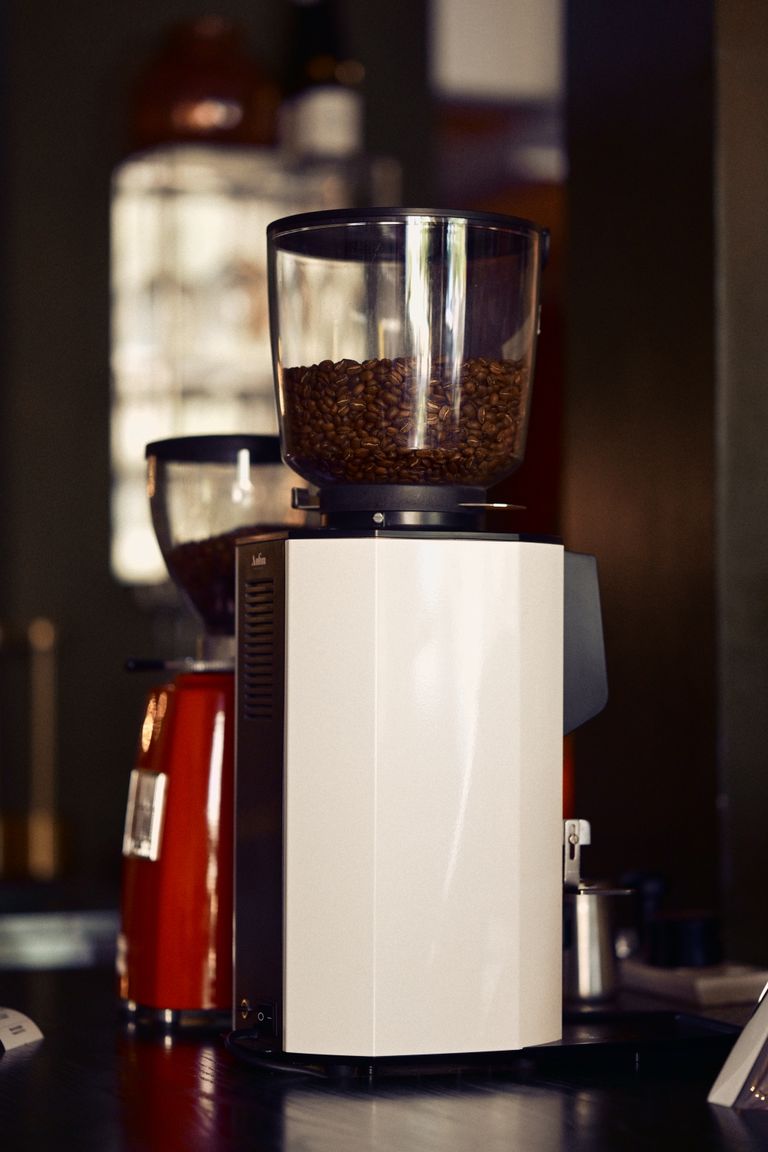
Do this: Move 1–2 steps coarser, pull, taste. You’re looking for the moment the harsh dryness lifts and sweetness comes forward. Change one thing at a time.
Fix 2: Shorten your ratio
Less water through the puck = less extraction.
Do this: Pull a ristretto-style shot — 18g in, 27–30g out (1:1.5). Shorter ratios emphasize sweetness and body while leaving bitter compounds behind.
Fix 3: Lower your brew temperature
Hotter water extracts more aggressively. This bites dark-roast drinkers especially.
Do this: Drop to 90–92°C (194–198°F). Dark roasts want cooler water — 90°C is a good starting point for anything past medium roast.
Fix 4: Check your beans — stale is bitter
Old coffee tastes bitter. As beans age past 3–4 weeks off roast, pleasant aromatics fade and what’s left tastes flat, woody, and harsh-bitter. No technique fixes stale beans.
Do this: Check the roast date. Use beans between 7 days and ~4 weeks off roast. If your bag has no roast date (just a “best by” date months out), that’s supermarket coffee — buy from a local roaster with a printed roast date.
Fix 5: Clean your equipment (rancid oils are bitter)
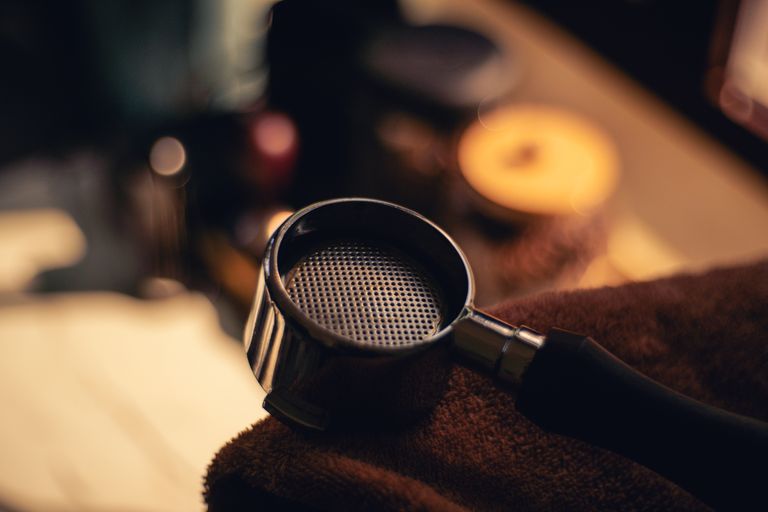
Old coffee oils turn rancid and taste bitter — coating the group head, basket, portafilter, and grinder burrs.
Do this: Backflush with detergent (Cafiza) weekly if you pull daily shots; plain water backflush after each session. Soak basket and portafilter in hot water + espresso detergent weekly. Clean your grinder monthly.
If your shots suddenly turned bitter and nothing else changed, dirty gear is suspect #1.
Fix 6: Check your dose
Overfilling the basket compresses the puck against the shower screen, restricting flow unevenly and over-extracting.
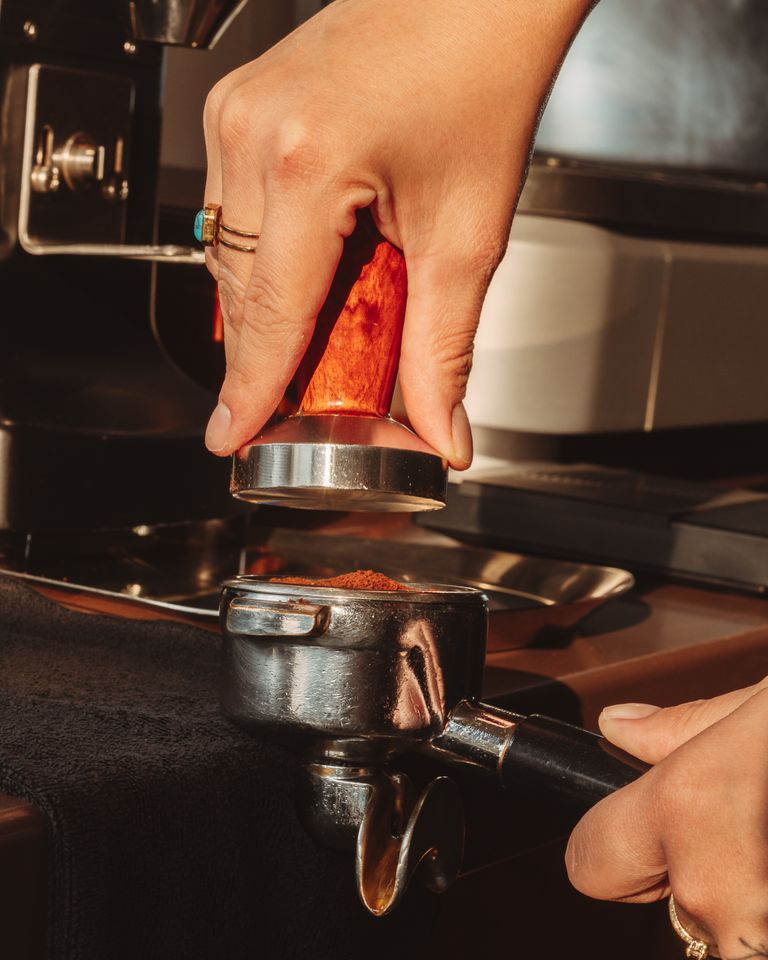
Do this: Dose to the basket’s rating — 18g for a standard double. Lock in the portafilter, remove it: if there’s a visible shower-screen imprint in the puck, drop 0.5g.
Fix 7: Don’t confuse bitter with strong
A proper 1:2 shot is intense — that’s normal. Bitterness specifically means harsh, dry, ashy. If your shot is intense but sweet with a pleasant finish, it’s fine.
The 5-minute bitter-shot checklist
- Grind 1–2 steps coarser
- Shorten ratio toward 1:1.5–1:2
- Drop temp to 90–92°C (especially for dark roasts)
- Beans within 4 weeks of roast date
- Backflush + soak baskets this week?
- Dose at basket rating, no shower-screen imprint
Why is my espresso bitter all of a sudden?
The usual suspects: beans went stale, grinder setting drifted finer, or equipment needs cleaning. Sudden bitterness with no technique change is almost always stale beans or dirty gear.
Is bitter espresso stronger (more caffeine)?
Not meaningfully. Bitterness comes from over-extracted compounds and roast level, not caffeine content.
Should I just add milk to bitter espresso?
Milk covers bitterness, but you’re hiding a fixable problem. That said, if you genuinely prefer milk drinks, a slightly over-extracted shot can punch through milk nicely.
Does a darker roast always taste bitter?
No — a well-pulled dark roast tastes like dark chocolate and caramel. Harsh, ashy bitterness usually means too-hot water or too-fine a grind. Drop the temp to ~90°C first.