Do You Need a Separate Grinder for Espresso? (Honest Answer)
This is the question behind half the “why does my espresso taste bad” posts on the internet. Here’s the honest answer: if you want espresso that tastes genuinely good — sweet, balanced, with body — yes, you need a grinder that’s actually built for espresso. Not necessarily an expensive one. But a separate, espresso-capable one.
Why espresso is so demanding on grinders
Espresso needs coffee ground very fine — roughly table-salt-to-powder territory — and, crucially, uniformly. A mix of boulders and dust (what cheap grinders produce) extracts unevenly: the dust over-extracts (bitter), the boulders under-extract (sour), and you taste both at once.
Drip coffee and French press are far more forgiving. Their coarser grinds and longer brew times smooth over inconsistency. Espresso’s 25-second, high-pressure extraction has no such mercy — it’s a magnifying glass on grind quality.
That’s why the grinder matters more than the machine. A $200 grinder with a $150 machine beats a $150 grinder with a $700 machine, every time. The grinder is the ceiling.
The usual suspects (and why they fall short)
Built-in grinders on all-in-one machines
The Breville Barista Express’s built-in grinder is the best of this bunch and it’s still the weakest link of that machine — stepped adjustments too coarse for fine dialing, and it struggles with light roasts. Cheaper all-in-ones are worse. They’re convenient, not capable.
Repurposed drip grinders
That nice Baratza Encore you love for pour-over? It can’t grind fine enough for espresso (the Encore ESP variant can — that’s a different grinder). Using one grinder for both brew methods also means constantly re-dialing; you’ll never have both right at once.
Blade “grinders”
Not grinders. They smash beans into random-sized shards. For espresso, they’re a non-starter — don’t even try.
Pre-ground coffee
Stale within hours of opening, ground too coarse, and you can’t adjust it. Fine for a pressurized basket while learning; a dead end for real espresso.
The exceptions (when you DON’T need one yet)
- You’re still on the pressurized basket. Pressurized baskets fake the resistance, so grind quality barely matters. Learn the machine first, buy the grinder when you switch baskets.
- You only drink milk drinks and don’t care. A pressurized basket + pre-ground makes a fine latte. No judgment — just know the ceiling.
- You have a hand grinder already. A 1Zpresso JX-Pro or K-Ultra (~$160–200) is a fully capable espresso grinder. Manual gets you enormous quality per dollar if you’ll do the cranking (about 30–45 seconds per dose).
What “espresso-capable” actually means
A grinder earns the title if it can:
- Grind fine enough to choke your machine (yes, choking is the test — then you back off).
- Adjust in small enough steps to dial in (stepless or micro-stepped preferred).
- Produce uniform particles without excessive fines.
- Handle light roasts without stalling (harder than it sounds for cheap motors).
You don’t need to spend $500. The entry level for real espresso grinding is roughly $150–200: Baratza Encore ESP, 1Zpresso K-Ultra/J-Ultra, KINGrinder K6. Each has limits, but each can pull genuinely sweet shots.
Can one grinder do espresso AND pour-over?
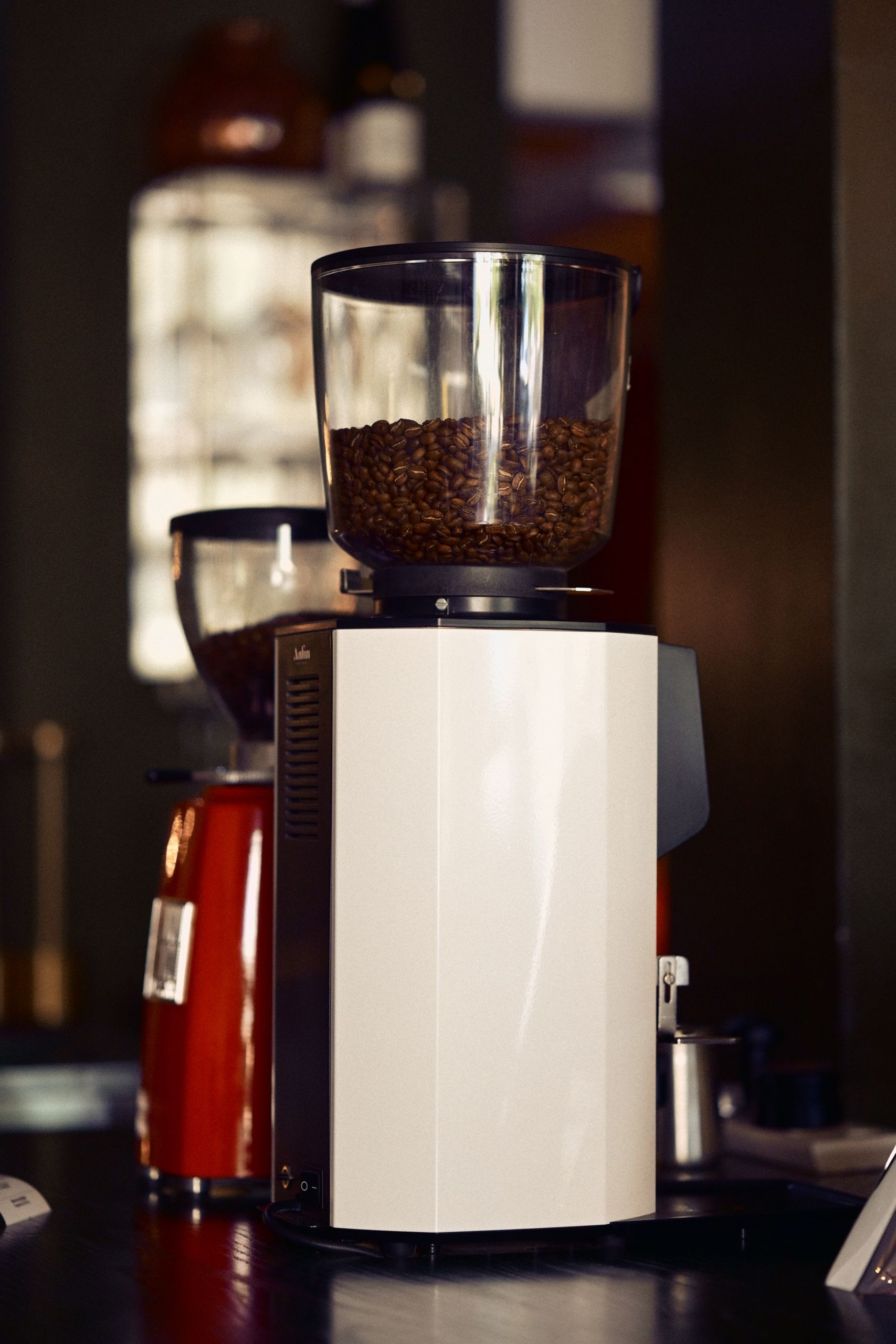
Yes, with caveats. Single-dose grinders (DF64, Niche Zero) switch between brew methods easily since there’s no hopper full of beans to purge. Hopper grinders waste 10–20g purging stale grounds every switch — annoying and expensive.
If you brew both, single-dose is the answer. If it’s espresso-only, a hopper is fine.
The bottom line
The grinder question isn’t gatekeeping — it’s physics. Espresso extraction is unforgiving, and grind quality is the variable that matters most. Budget accordingly: spend at least as much on the grinder as the machine, and if money is tight, buy the grinder first and the machine second. A great grinder with a basic machine makes good espresso. A great machine with a bad grinder makes expensive disappointment. Our grinder pairing guides match proven grinders to the most popular beginner machines by budget — start there.
Frequently asked questions
Is the Breville Barista Express grinder good enough?
It’s the best built-in grinder on any consumer all-in-one, and plenty of people make enjoyable espresso with it. But it’s the machine’s limiting factor: coarse steps, struggles with light roasts. Most owners eventually add a standalone grinder and keep the BBE as the machine — which tells you everything.
Can I use the same grinder for espresso and drip?
You can, but you’ll re-dial constantly and waste coffee purging. A dedicated espresso grinder plus a cheap drip grinder beats one expensive grinder doing both badly.
How much should I spend on an espresso grinder?
$150–200 gets you genuinely capable (Encore ESP, KINGrinder K6, 1Zpresso). $300–500 gets you excellent (Eureka Mignon Specialita, DF64). Above that is diminishing returns for most home baristas.
Are manual grinders really as good as electric?
At the same price, manual grinders outperform electric — a $200 hand grinder has burrs comparable to a $400+ electric. The tradeoff is 30–45 seconds of cranking per shot. For 1–2 drinks a day, it’s the best value in espresso.